

The Difference Between Thriving and Surviving
The mindset shift you must make to have success in sport and in life.

Triple Threat Life is a weekly newsletter with practical tips and mindset techniques for endurance athletes. Choose from free and paid options with cool benefits.
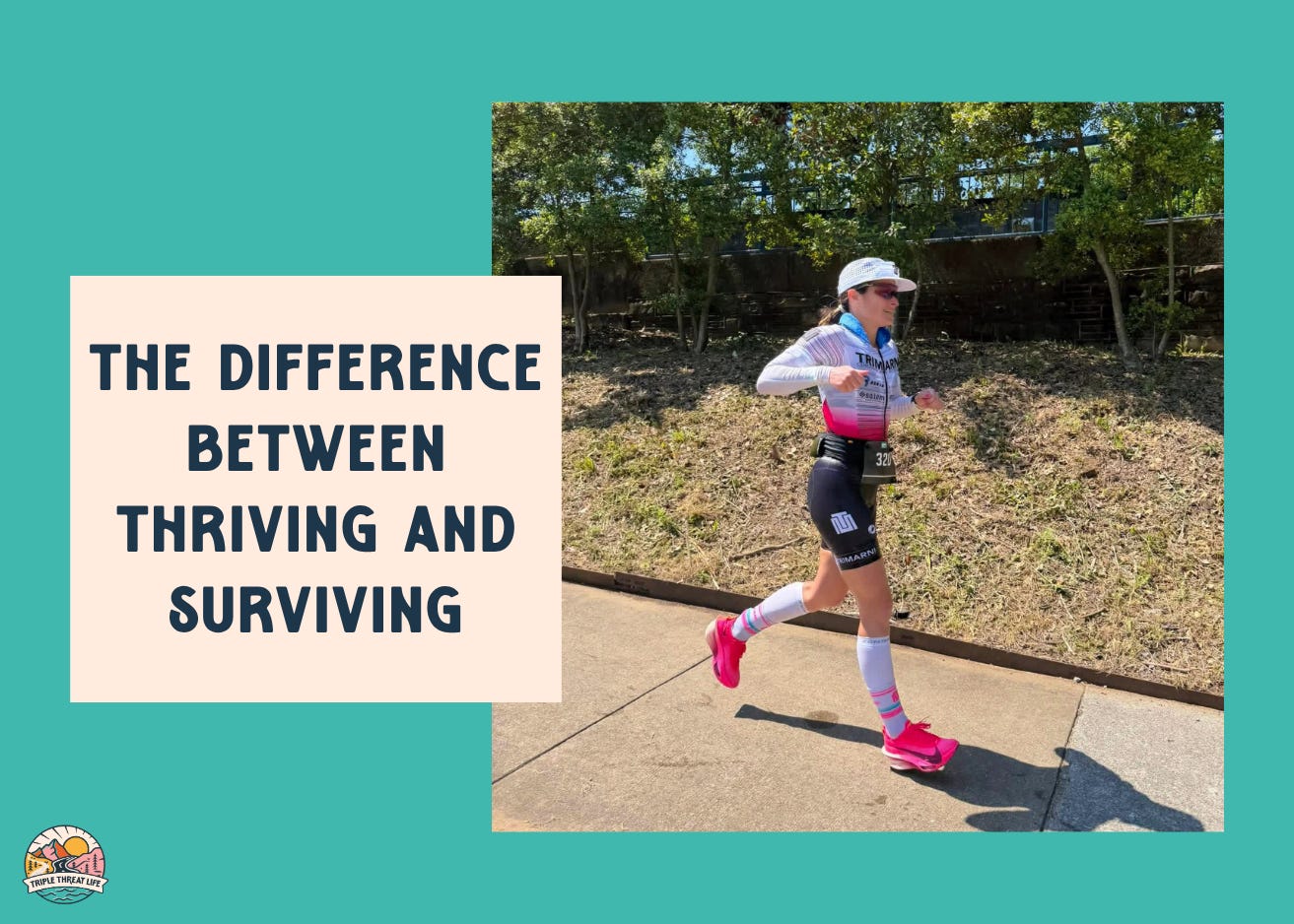
I encounter A LOT of athletes getting ready for big endurance events.
And let’s keep in mind that endurance is relative, because it depends on where an athlete is in their fitness journey.
For one person, it might look like making their health a priority, which leads them to train for a 5K or a sprint triathlon.
For another, it might look like tackling a bigger challenge like an Ironman 70.3, an Ironman, or a marathon.
For some, it might simply mean making a commitment to cook their own meals and walking around the block for 15-20 minutes a day.
It all takes endurance.
We should not discount someone else’s efforts as “too easy” or “too crazy” simply because it doesn’t align with our own experience or expectation.
Having the ability to endure isn’t restricted to those who do ultramarathons or climb Mount Everest. You can endure through personal hardship, financial difficulties, loss of a loved one, a health diagnosis, or a broken relationship.
So, what is endurance?
Endurance means being resilient in the face of obstacles.
Endurance is having the stamina to persevere despite considerable fatigue.
Endurance means having the ability to withstand physical, mental, and emotional stress.
In one of my favorite books about mindset in sports- Endure: Mind, Body, and the Curiously Elastic Limits of Human Performance- Alex Hutchinson says this about endurance.
“A suitably versatile definition that I like, borrowing from researcher Samuele Marcora, is that endurance is ‘the struggle to continue against a mounting desire to stop.’”
That’s all. Having endurance simply means that you make a choice to keep going even when you want to quit.
I recently filled out a survey from Steve Magness about pressure in competition. One of the questions that struck me was:
What do you think makes someone a real competitor? What characteristics do they possess?
First and foremost, a competitor is someone who competes in an event, whether it’s a race, match, game, trial, or contest. But beyond that, I believe that anyone who has put in the time and effort to do the following things is a true competitor.
A true competitor
Approaches their sport or skill with a learning mindset to seek knowledge, wisdom, and guidance.
Makes a commitment to train (the right way) to be as prepared as they can be.
Dedicates themselves to the process and to enduring the highs and lows.
Doesn’t take shortcuts, but does everything needed to show up to a competition prepared to do their best.
Maintains perspective, treats others with respect, and extends grace to fellow competitors.
Does the best they can do on the day.
Period. That is it.
Notice I did not include details about speed, pace, or power. I did not include information about elite performance, results, or awards. Honestly, I do not care if you ran a 5:00-minute mile or a 15:00-minute mile for your half marathon. I do not care if you completed your half ironman in 4 hours or 7 hours. I do not care if you came in first or last at your Ironman.
*Here’s an excerpt from a special project I’m working on that explains a bit more…
As an athlete, it’s sometimes hard to live in a world that prioritizes performance over experience and celebrates ego over humility. As an athlete in Christ, I value dedication and diligence, honor God with my body, and glorify Him through sport. The things of this world (awards, approval, notoriety) are easily taken away. But the gifts of the Father (forgiveness, salvation, redemption) are given freely and last forever.
If you did all the things above and that was the absolute best you could do on the day, then you are a competitor. Remember that. You have to give people permission to make you feel “less than.” You have a choice. Choose differently.
Reminder: Triple Threat Life is a reader-supported publication. If you enjoy reading and would like to support my writing, a paid subscription is the best way to do that. Multiple options with cool benefits.
Now, with all that being said, I think it’s also important to understand the difference between thriving and simply surviving. I see a lot of athletes talking about their preparations for long-distance triathlons, run races, ect. on social media (where people share such things these days.) And I’ve noticed a common pattern.
They are doing what it takes to survive and that’s it.
They do just enough to “get through” the swim, to “finish the bike,” or to “survive the run.” First of all, this is language we should avoid, because the words we say to ourselves matter.
Secondly, if that’s the truth and all you’re doing to prepare for your half Ironman is swim for 20 minutes, two days a week, then I would say- yes, that’s an accurate statement. You’re hoping to barely get through the swim.
If your longest ride to date is 12 miles and you’re signed up for a 70.3 in August, that is a mistake. You should have researched more about the event you signed up for.
I know athletes who have done numerous Ironman in the past and only start training 2 months out, because they can literally walk most of the marathon and still finish.
But is that really what you want to do?
This is not about speed. This is not about ability. This is not about talent. This is about commitment.
Have you committed wholeheartedly to the goal that you’ve set out to do? Will you dedicate yourself to preparing for it the right way?
Certainly, there will be days when things go wrong, and you’re tired, and you have to skip a workout or modify a session. That’s just part of being an athlete. But when someone says- “I wasn’t able to do long workouts the past three weekends, because life just got in the way,” All I hear is excuses.
This is not a joke.
This is an endurance event, not a participation event.
There is risk involved and safety concerns (for everyone) if you aren’t prepared.
I do not subscribe to, nor support the idea of, “just sign up for the race and then you can figure it out.” That is poor advice- misguided at best, dangerous at worst.
Also, doing the bare minimum is never a solid plan. Instead, decide what you want to do, learn everything you can by studying those who do it well, make a plan, and then commit.
“All who are prudent act with knowledge, but fools expose their folly.”- Proverbs 13:16
After all, who wants to survive when you can thrive?
For anything you want to do in life- whether it’s a race, an interview, a career change, school, etc. the way you thrive is by doing what is best.
Good. Better. Best.
There is a difference between doing what is good, and doing what is better, and doing what is best.
Do you think we particularly enjoy waking up at 4:50 am, three times a week, to get to the pool so we have enough time to swim for an hour before work?
Do you think we relish driving 30 minutes outside of town to a safer place without cars so we can get in a good quality workout?
Do you think it’s fun running in 90° heat, jumping in the shower while still sweating, and eating breakfast in the car on the way to church?
We do these things because we are committed to our goal, dedicated to the process, and because we always choose to do what is best.
Does this take more work, planning, time? YES! If it was easy everyone would do it.
Do what you need to do in order to be as prepared as you can be, and give your absolute best on the day. That is all any athlete can ask for.
Then, the results, placings, splits don’t really matter. Yes, it’s nice when you see improvement and gains from your hard work. But, ultimately if you did everything within your power to prepare, perform, and persevere. That is reason enough to be satisfied.
News & Notes
I recently wrote 7 Wild Triathlons Where You Race Against the Elements for Triathlete Magazine.
Things I’ve enjoyed reading lately:
*For paid subscribers! There are 3 new videos in the Video Vault.
How to crush early morning workouts
Ironman bike rules explained
How (and why) to do hill repeats
The Video Vault is filled with 70+ triathlon and endurance tutorials on everything swim, bike, run, strength, nutrition, mindset, and race day. Sign up for a paid subscription and get access to the vault, a free Tri Smarter, Not Harder e-book, a dozen partner discounts, and monthly expert webinars. Click here.
I rounded up some of my favorite photos from recent IRONMAN events. Lovely, atmospheric, emotional photos from big races around the globe!
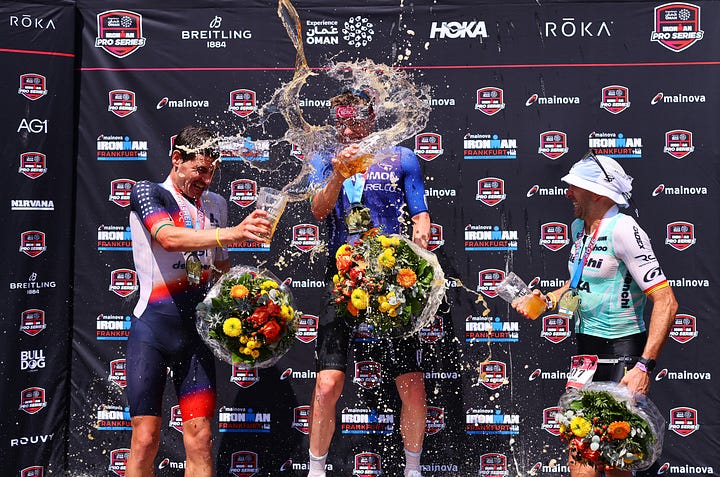
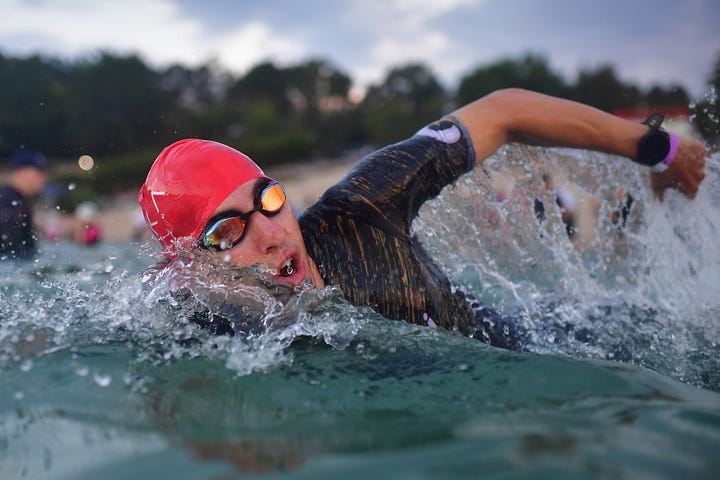
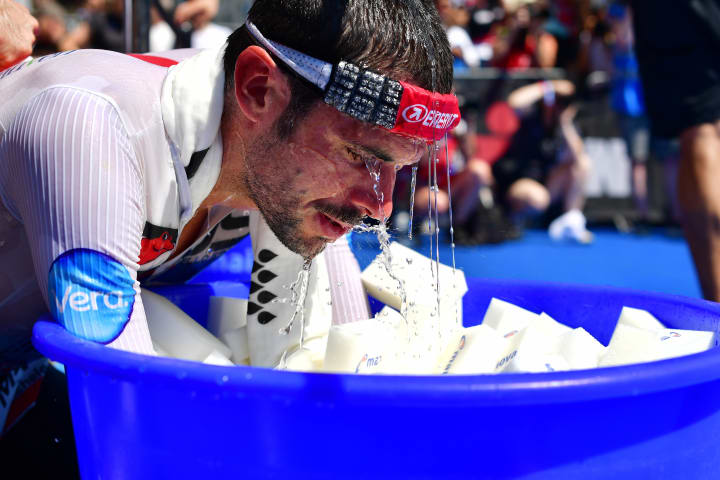
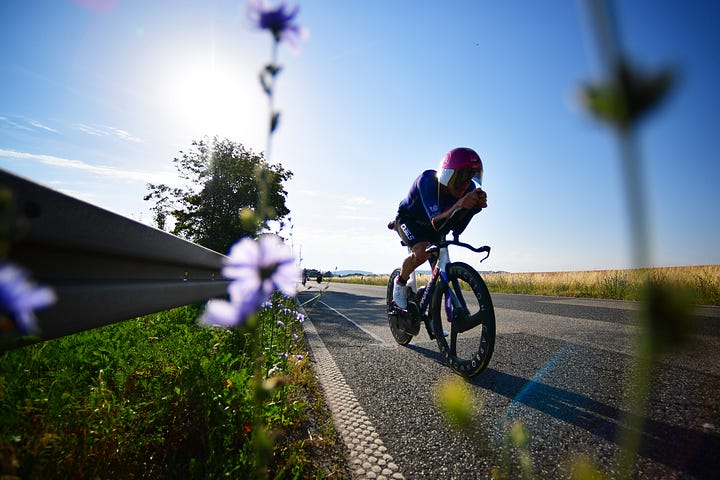
IRONMAN Frankfurt, Photo Credit: Joern Pollex and Alexander Koerner.


Also love the article you reference by Mark Allen.
The sport is not meant to be easy, but if we find no joy in it, then why do it?
Great advice as usual!
I think a lot of people need to hear this. You are right, endurance events are no joke. I’m guilty sometimes of not being as prepared as I should be, but I do strive to the very best at whatever it is that I am doing and to be constantly improving and learning.
“So, whether you eat or drink, or whatever you do, do all to the glory of God.”
1 Corinthians 10:31 ESV